Free Speech Debate

Thirteen languages. Ten principles. One conversation.

Log in | Register | Mailing list

Loading...
1We – all human beings – must be free and able to express ourselves, and to receive and impart information and ideas, regardless of frontiers.»
2We defend the internet and all other forms of communication against illegitimate encroachments by both public and private powers.»
3We require and create open, diverse media so we can make well-informed decisions and participate fully in political life.»
4We speak openly and with civility about all kinds of human difference.»
5We allow no taboos in the discussion and dissemination of knowledge.»
6We neither make threats of violence nor accept violent intimidation.»
7We respect the believer but not necessarily the content of the belief.»
8We are all entitled to a private life but should accept such scrutiny as is in the public interest.»
9We should be able to counter slurs on our reputations without stifling legitimate debate.»
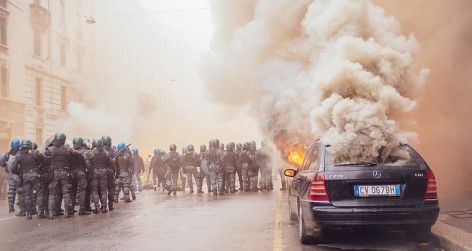
10We must be free to challenge all limits to free expression justified on such grounds as national security, public order and morality.»

What’s missing?

Is there a vital area we have not addressed? A principle 11? An illuminating case study? Read other people's suggestions and add your own here.

Home | Case studies | Blasphemy law and violence in Pakistan

Blasphemy law and violence in Pakistan

In 2009, Aasia Bibi, a Christian Pakistani woman was accused of blasphemy. The governor who called for a review of her case was killed two years later, writes Ayyaz Mallick.

Christians Protest Office Shooting
Karachi, Pakistan (Photo by Syed Zargham/Getty Images)

The case

In June 2009, Aasia Bibi, a Christian woman and mother-of-five from a village in the Sheikhupura district in Pakistan, got into an argument with fellow villagers who accused her of polluting the water in a well by touching it as a non-Muslim. Afterwards, Aasia Bibi was accused by Qari Salam, a local cleric, of using derogatory words against the Prophet Muhammad and was arrested under section 295-C of Pakistan’s penal code, commonly known as the blasphemy law. On 8 November 2010, she was found guilty of blasphemy and sentenced to death by the Sheikhupura city court. Her husband, Ashiq Masi, a labourer, declared that Aasia Bibi’s conviction was based on “false accusations” and challenged the decision in the Lahore high court.

Though introduced during the British Raj, the blasphemy law in Pakistan was amended to its present form in 1986 during the military regime of General Zia-ul-Haq. Since then, a number of persons, usually from minority religious groups, have been accused under the amended law. Although no execution has ever taken place, some 32 individuals, charged under the blasphemy law, have been killed extra-judicially and at least two judges have been murdered after acquitting accused individuals.

In Aasia Bibi’s case, international outrage and calls from human rights groups initiated a series of symbolic, sympathetic statements and actions from Punjab province governor Salman Taseer, who called for a review of the case and reform of the law. Taseer was the subject of much criticism within the country for siding with an accused Christian woman and interfering with the due course of law. On 3 January 2011, he was shot dead by one of his own guards in broad daylight in Pakistan’s capital Islamabad. The guard, Mumtaz Qadri, confessed to the murder and was sentenced to death by an anti-terrorism court, but there were protests in his support by sympathetic groups and religio-political parties. The judge who passed the guilty sentence on Mumtaz Qadri has fled Pakistan for Saudi Arabia, fearing for his life. On 1 March 2011, Shahbaz Bhatti, federal minister for religious minorities, a vocal advocate of reform of the blasphemy law and a prominent minority rights activist, was killed in Islamabad in an attack by gunmen on his car. In early 2012, the culprits of Bhatti’s killing had yet to be found and Aasia Bibi still awaited a decision from the Lahore high court on her appeal.


Author opinion

Pakistan’s blasphemy law is problematic on a number of levels. Firstly, in its current manifestation, Section 295-C of the penal code does not include in its clauses the intention of using derogatory words against the Prophet Muhammad. Thus, from the onset, the onus of proving oneself innoceBlnt is placed upon the defendant. This violates one of the most basic principles of any modern justice system ie the accused is innocent until proven guilty.

Secondly, due to this inherent flaw, the law has been regularly used to target members of minority religious groups and settle personal scores in cases of property or monetary disputes. This is borne out by the fact that almost half of those accused under the law are of minority religious groups although only about 3% of Pakistan’s population are non-Muslims. Thus, an already inherently unfair law is being used to target members of disadvantaged groups within the country.

Third, and most importantly, the Pakistani state’s patronage of right-wing groups since the 1980s (about the same time the military regime introduced amendments to the law) has created increased space in certain classes and sections of society for such injustices to take place and gain acceptance. This is evidenced by tacit support of Taseer’s killing in the aftermath of the incident in sections of the print and electronic media, vocal and threatening opposition to proposed amendments in the blasphemy law, large rallies in support of the murderer by religio-political parties (with the Sunni Tehrik and Jamaat-e-Islami at the forefront) and scenes of lawyers garlanding Qadri with petals.

The social engineering project undertaken by the Pakistani state (read: military) in the aftermath of the 1977 coup and Afghan War of the 1980s, including popularising a certain narrative of the country’s history through textbooks and censorship of the Urdu media, has decreased the space for progressive politics and activism in Pakistan with individuals and groups not fitting in with the state’s narrow definition of “national interest” and “ideology”, increasingly ostracised and under threat. Thus, the state’s misplaced priorities do not just pose a grave threat to minority groups in Pakistan; they also serve to shackle the formation of an alternative, progressive narrative for the country’s history, existence and position in the comity of nations.

- Ayyaz Mallick
Print
Published on: February 16, 2012 | No Comments

Leave a comment in any language


Free Speech Debate is a research project of the Dahrendorf Programme for the Study of Freedom at St Antony's College in the University of Oxford. www.freespeechdebate.ox.ac.uk